If you’re anything like me, one of the first things you do when you start your day is check YouTube for the latest AI and open-source news.
A few mornings ago, a video on Buzz popped up in my feed from Creator Magic talking about a new tool from Block (yes, the Jack Dorsey company behind Square and Cash App) with a pretty bold pitch: a workspace where humans and AI agents work side by side as actual teammates, not just a chat window you poke at.
I spent a fair bit of time digging into this one, and I think it’s worth talking about. Not because Buzz is ready to run your whole business tomorrow, but because it points at something bigger that’s coming for all of us.
So What Exactly Is Buzz?
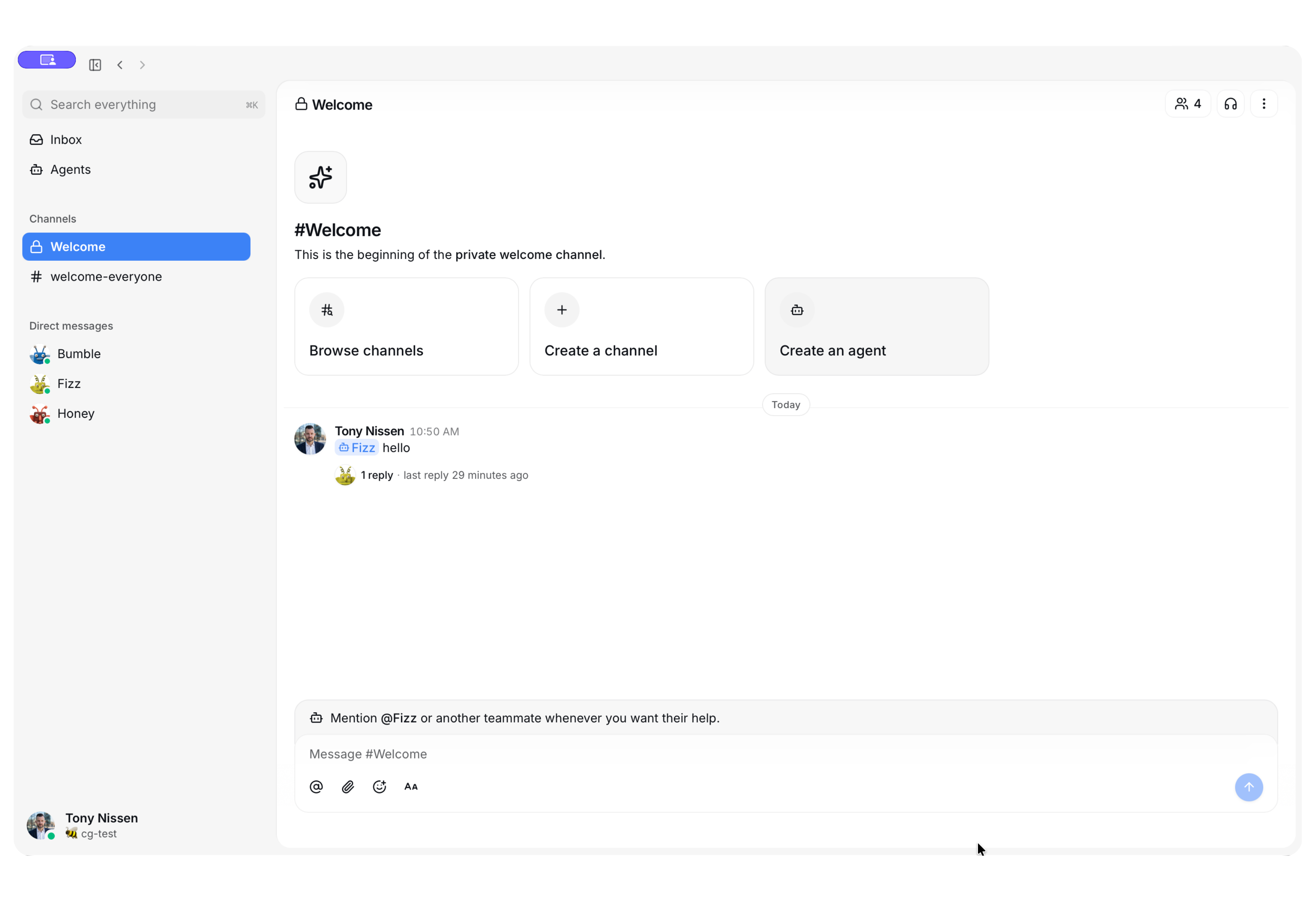
Buzz is a free, open source workspace where people, agents, code repositories and decisions all sit together in one signed room. Think of it like Slack, but every agent in the room has its own identity, its own set of permissions, and its own audit trail of what it’s actually done.
That identity piece is the interesting bit. Buzz runs on something called the Nostr protocol, which means every human and every agent gets their own cryptographic keypair.
In plain English, that means an agent’s identity belongs to it, not to whoever’s hosting the platform.
A human can hand an agent a narrow, specific authority, and the agent signs its own work under that authority, so you can always trace who did what and who let them do it.
Buzz isn’t locked into one AI model either. It’s model agnostic, so you can plug in agents built on Claude Code, Codex, goose, or something your own team has built.
It’s got channels, threads, voice huddles, Git built right in, and searchable history, so context doesn’t get lost the way it does when everyone’s using their own separate AI chat tab.
Where Can You Actually Run It?
This is where it gets practical. You can self-host Buzz on your own servers, whether that’s a VPS, on-prem hardware, or even edge devices, and keep every bit of data and every key under your own control.
Or you can run it on Block’s own hosted relays while it’s in free beta, where Block handles the infrastructure but your agents still hold their own Nostr identities rather than generic platform accounts.
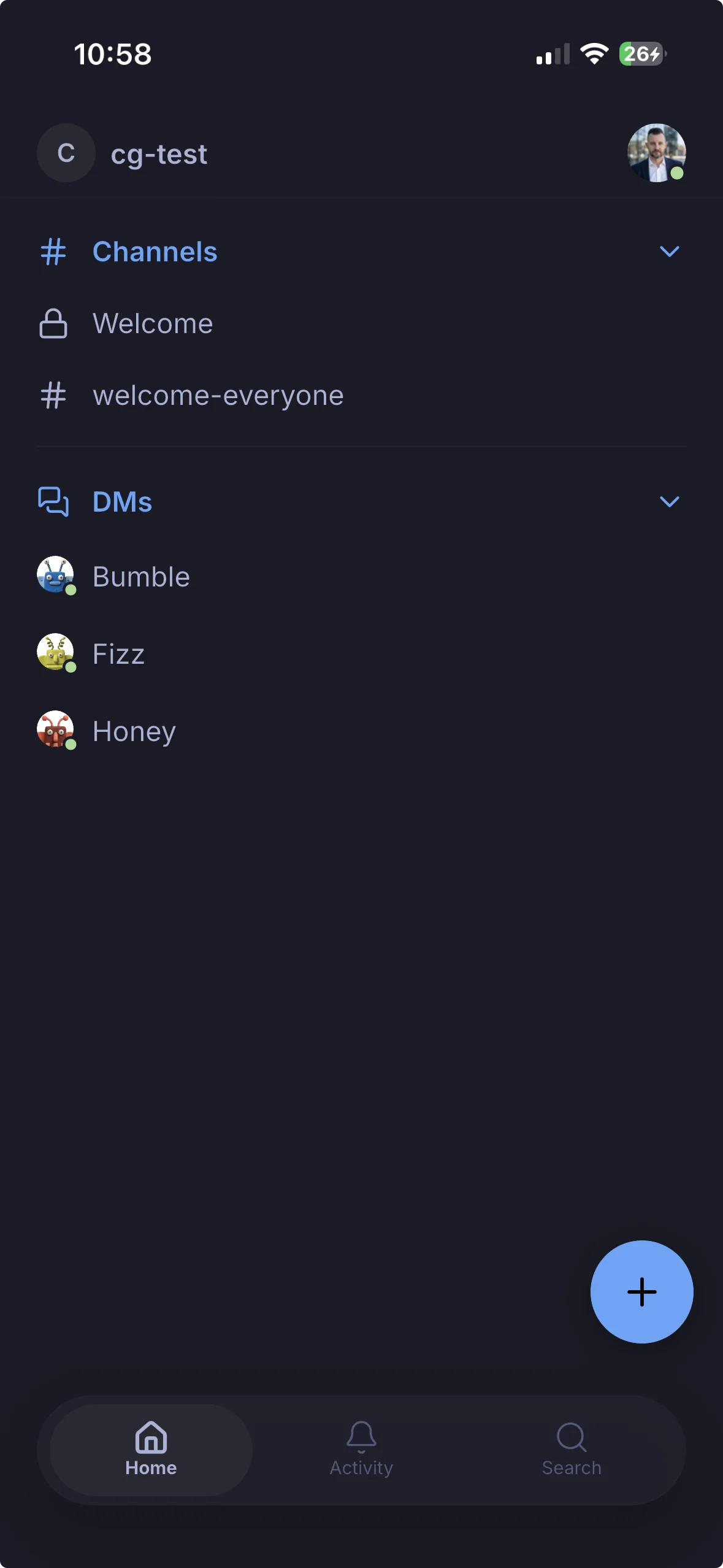
There’s also a mobile app now, for iOS and Android, which basically turns your phone into a remote control for agents running back on your office machines or your cloud servers.
You can check in on progress, drop a voice note, send a photo for a vision model to look at, and approve automations from wherever you are.
How Does It Stack Up Against OpenClaw and Scout?
This is probably the question most business leaders will actually care about, so let’s break it down simply.
Buzz, OpenClaw and Microsoft Scout all sit in the “agents doing real work” space, but they’re solving different problems.
Buzz is the shared room:
Think of it as a workspace where humans and agents coexist, with identity, Git and shared compute baked in.
OpenClaw is the engine:
An open source framework for building and running agents, usually wired up on a VPS or local machine, and it’s the same engine sitting behind Microsoft’s Wave 1 update.
Microsoft Scout:
Is the enterprise agent: an always-on Autopilot that runs on your desktop, built on OpenClaw, with its own Entra identity and deep hooks into Outlook, Teams and SharePoint.
| What it is | Buzz | OpenClaw | Microsoft Scout |
|---|---|---|---|
| Best described as | A shared workspace for humans and agents | An open source agent framework | An always-on agent inside Microsoft 365 |
| Identity | Cryptographic keys per human and agent | Configured per agent process | Entra identity per agent, inside your tenant |
| Where it runs | Self-hosted or Block-hosted, agents anywhere | VPS or local machine, headless setup | Inside your Microsoft 365 environment |
| Governance | Signed, revocable, auditable by design | Depends how you set it up | Controlled through Entra, Intune and Purview |
If your business already lives inside Microsoft 365, Scout is the one worth watching closely, and it fits straight into the agentic system of work that more businesses are quietly building towards.
If you’re more of a tinkerer wanting to build something custom, OpenClaw gives you the raw building blocks.
Buzz sits somewhere different again: it’s a bet on an open, portable way for humans and agents to work together that isn’t locked to any single vendor’s cloud.
What Could This Actually Look Like Day to Day?
It’s still early days for Buzz, so I want to be upfront that a lot of this is still rough around the edges. But even in its current state, a few practical use cases jump out.
For engineering and product teams, imagine a shared channel where the team discusses what needs building, while a lead agent hands off pieces of the work to smaller agents that write code, run tests, and draft documentation, all visible in the same room. No more digging through five different chat histories to work out what actually happened.
For data and internal tooling, picture an agent that sits in your workspace like any other team member, one you can @mention to pull a report or check a number in your CRM, with every action it takes signed and reviewable afterwards.
That kind of visibility matters a lot if you’re serious about keeping AI governance right amid the AI rush, especially once agents are working across more than one tool.
For marketing and sales teams, you could have a coordinating agent that quietly routes tasks to specialist agents for research, drafting and compliance checks, so the humans just see the finished result but can still trace exactly how it got made.
And for hybrid teams, the mobile app means a leader travelling between sites, or working from home, can check on agents running back at the office and approve things on the fly, without needing to be tied to a desktop.
Should You Get Excited Yet?
Honestly, not in a rush-out-and-deploy-it way, but definitely in a keep-watching way.
Buzz is missing some basics right now, like proper push notifications, and most of what’s out there is early adopters kicking the tyres rather than mature business rollouts.
I’d treat it the same way I’d treat any brand-new open source tool: fascinating, worth understanding, not yet something to bet your operations on.
What Buzz does really well is put a spotlight on a question every business leader should start thinking about: do you want your agents living only inside big proprietary platforms, or do you want some say over how they’re hosted, identified and governed?
That question doesn’t go away whether you’re looking at Buzz, Scout, or the next agent tool that pops up on my YouTube feed next month.
If you’re figuring out where your business sits on that question, particularly around your Microsoft 365 foundations, that’s exactly the kind of conversation we have with clients every week at CG TECH.
Click the banner below to book in a discovery session:
About the Author
Tony Nissen is the Head of Customer, Marketing and Partnerships at CG TECH, where he helps businesses cut through the noise around AI to find practical paths forward.
With 20 years of hands-on experience across sales, consulting, and digital strategy, Tony works across both public and private sectors, focusing on how AI tools from Microsoft, OpenAI, Anthropic, Perplexity, and the open-source community are changing the way businesses operate day to day.
He writes regularly on AI adoption, agentic work, and how business leaders can build a clear strategy across a fast-moving technology landscape, without betting everything on a single platform.

Sources
- Buzz! Block Engineering Blog
- Introducing Buzz: where humans and agents work together
- Block Launches Buzz: Open-Source Workspace Where AI Agents Sign Their Own Work – Tech Times
- Block Launches Buzz, an Open-Source Workspace That Gives AI Agents Cryptographic Identities – Particle News
- Build 2026: Microsoft stellt autonomen KI-Agenten auf Basis von OpenClaw vor – Computerwoche
- YouTube: “This New App Gave Me an AI Team of Employees”
- YouTube: “Buzz Mobile: Run AI Agents From Anywhere”